Friday, June 5, 2015

Spotlight on Students: Race Essay

The following is an example of exemplary work from one of my Anth 102 students, Carol Vinger.  In this essay Vinger explores the lack of biological evidence to support the concept of race.  This concept is a socio-cultural one but one that is often confused as a biological one.  I hope you enjoy learning more on the topic from Vinger.  


            The debate about separating the different ethnic races of humans into distinctly separate species or subspecies of Homo sapiens has brought about some very polarizing conversations amongst physical anthropologists, biologists, and psychologists for decades.  Proponents for the separation of races into distinct species argue that the difference in skin color, cranial capacity, body shape, and intelligence amongst the racial groups support their position.  Their opponents argue that these differences are merely variations of genotypes and phenotypes amongst all humans, much like hair and eye color, or are influenced by culture and environment.  Racial bias has played a role in findings made by proponents from each of these disciplines in the past, but we know that if proper scientific methods are utilized to prove or disprove their findings, science will ultimately draw out the facts.  This paper will focus on differences amongst racial groups with respect to genetic variation, body type and skin color, and cranial capacity and intelligence utilizing scientific thinking for the purpose of determining whether these races are separate species or variations of one species.

            The AAA’s position on race was published in 1998 and set forth its conclusions based on analysis of genetic variation amongst racial groups and historical classification of race based on cultural bias, the latter of which will be discussed later in this paper.  Careful study of physical variations of genes shows that a single racial group possesses 94% of the total physical variations possible, and geographically separated racial groups differ from one another in less than 6% of these variations (AAA 1998).  This analysis helps support the AAA’s conclusion that all modern humans fall within the single species of Homo sapiens due to their overwhelmingly similar genetic material and physical characteristics. 

            The emergence of Homo sapiens as a species occurred in East Africa nearly 200,000 years ago (Stein & Rowe 2014: 365).  If African migration accounts for the entire world’s human population, one might expect less difference in physical appearance between geographically separated racial groups than actually exists.  For example, Caucasians and Asians have much lighter skin than Africans.  The advantage of darker skin in Africa serves to protect the skin from the ultraviolet rays of the sun in a grassland environment and to prevent the loss of folic acid in the body that lead to infant mortality and lower sperm production (Stein & Rowe 2014: 398).  The advantage of lighter skin in Europe and Asia serves to aid the body in production of Vitamin D and absorption of calcium for stronger bones in an environment with lower sunlight conditions, as well as a decrease in incidents of frostbite in colder climates (Stein & Rowe 2014: 398-399).  Scientists from Penn State University who studied the mutation of lighter skin say they have found the answer.  They isolated the gene known as slc24a5 that mutated 20,000 to 50,000 years ago when Africans migrated to Europe and Asia.  This mutation proved to be a distinct genetic advantage in the North, which led to a decrease in dark-skinned humans and an increase in light-skinned humans in these areas.  They also explain that two separate mutations occurred, one in Europe and one in Asia, which may account for the slightly different color variations between light-skinned Caucasians and light-skinned Asians (Weiss 2005).   

            Likewise, people who live in the extreme northern climates have much shorter and stockier builds than Africans near the equator, who tend to have long and lean builds.  The advantage of longer and leaner builds in Africa provides for more rapid cooling of the skin in hot temperatures; the greater the surface area of the body in relation to mass, the greater the opportunity for the body to sweat and cool itself through evaporation (Stein & Rowe 2014: 399).  Those individuals who did not exhibit the longer, leaner body build had a much tougher time surviving and, therefore, were less likely to pass on their genetic material.  Conversely, the advantage of shorter, stockier builds in the far north is for less surface area for heat loss from the exposed skin in extremely cold climates.  The extra body mass further serves to insulate the body from colder temperatures.  People from the middle latitudes of Europe and Asia tend to exhibit a combination of these body shapes due in part to the mixed climate of cooler winters and warmer summers (Stein & Rowe 2014: 400).  These differences of body size and shape occurred most likely by natural selection since those individuals with the distinct genetic advantage in their particular environment had the greatest chance of survival and, therefore, the greatest chance of passing on their genetic material. 

            Statistics gathered at autopsy by psychologist J. P. Rushton demonstrate that among racial groups, Caucasians have a larger cranial capacity and brain weight than Africans (Rushton & Bogaert 1989).  Physical anthropologists have long associated larger cranial capacity with higher intelligence.  If true, modern females should have a lower average IQ than males due to their smaller cranial capacity, but in fact, the average IQ of females are equal to that of their male counterparts (Nisbett 2007).  An article published by the New York Times in 2007 detailed several psychology and education studies over the last several decades that concluded that Africans score on average 15 points less on IQ tests compared to Caucasians (Nisbett 2007).  The reasons for the lower scores from Africans have less to do with smaller brain weight and more to do with the lack of educational opportunity and environmental factors. 

IQ testing among Europeans and Americans between the 1950s and the 1980s demonstrate an increase in the average IQ from 82 to 100 during that time, a period characterized by great improvements in education and social factors, including improvements in environmental conditions, better nutrition, and a decrease in the average size of the family.  These are commonly referred to as the Flynn Effect (Racialreality 2011).  Africans largely live in much less desirable living conditions than do Caucasians and Asians presently, have little to no access to birth control, and have a different cultural emphasis on education than Caucasians and Asians.  Furthermore, Africans have a protein-poor diet, an essential nutrient for brain growth and intellectual development from gestation through the early stages of childhood (Boundless 2014).  If conditions improve in Africa similar to the educational, nutritional, and environmental gains made by Caucasians and Asians during the last half of the 20th century, the average IQ scores of Africans, presently at 85, are likely to experience the Flynn Effect and show dramatic gains in the next several decades (Nisbett 2007).

            While this paper primarily focuses on physical variations among Caucasians, Asians, and Africans, there are no two races throughout the entire world that exhibit more than 6% differences in physical characteristics from one another, making modern humans extremely similar to one another (AAA 1998).  Natural selection has adapted only a few physical characteristics within racial groups to better suit their environments.  Proponents for the separation of races into distinctly separate species rely on cultural bias to support their position, which in turn perpetuates the social stigmas associated with skin color.  Sufficient evidence has been established that all modern humans should share the same genus and species, Homo sapiens, despite the very few physical variations among them.   


References

AAAnet.org (1998).  American Anthropological Association Statement on “Race”.  Retrieved from:
http://www.aaanet.org/stmts/racepp.htm


Nisbett, R. E. (2007).  NYTimes.com: All Brains Are the Same Color.  Retrieved from:
http://www.nytimes.com/2007/12/09/opinion/09nisbett.html?pagewanted=print&_r=0

Racialreality.com (2011).  African IQ and the Flynn Effect.  Retrieved from:
http://racialreality.blogspot.com/2011/11/african-iq-and-the-flynn-effect.html

Rushton, J. & Bogaert, A. (1989).  1989 Population Differences in Susceptibility to Aids: An Evolutionary Analysis.  Class handout.

Stein, P.L. & Rowe, B.M. (2014). Introduction to Human Evolution and Prehistory.  United

States of America: McGraw Hill Education.

            In-Text Reference: (Chapter 15: The Evolution of Homo sapiens, pgs. 362-386)

Weiss, R. (2005). Washington Post.com: Scientists Find a DNA Change That Accounts For White Skin.  Retrieved from:
http://www.washingtonpost.com/wp-dyn/content/article/2005/12/15/AR2005121501728.html
 

Saturday, May 30, 2015

Spotlight on Students: Gender Comparisons

The following post features work produced by students of my Anth 101: Introduction to Cultural Anthropology course.  These students were tasked with comparing the gender identities, norms, roles, beliefs, values, etc. between two cultures: their own and one from a list of provided.  These are the exemplary pieces composed by my students.

Cami Crazier


Although many societies have three or four gender identities, Sharyn Davies argues that there is fifth gender among the Bugis people of Indonesia. With the most known gender identities: male and female, the Bugis people also have the calabai, calalai, and bissu. The  calabai are biologically male people whom take on the role of a women. In contrast, the calalai are biologically women whom take on the roles of men, although rarely seen publically. The bissu take on the roles of both males and females (Bailey 2013). Because many gender identities exist in the Bugis culture, gender norms, values, identities, and roles are expressed differently from the aspects of the American culture.

In the Bugis culture, gender is not based on one’s biological matter. Instead, gender is based on one’s own choosing in appearance and how they want to be perceived by others. No matter which gender the individual chooses, each will have a specific role in the community. For example, the calabai are responsible for the weddings. Sharon Davies (2010) explains "[t]he calabai will be responsible for many things: setting up and decorating the tent, arranging the bridal chairs, bridal gown, costume for the groom, and the entire wedding party." A bissu's role is to give blessings of protection and safety to the people. They attend and can take charge of events such as birth or death. Occasionally, they must show the people that they have a connection to the spiritual world (Bailey 2013). Also, the bissu's attire must be symbolic to both male and female necessities. The calalai are less accepted in their community and tend to usually hide their identity because of their lack of economic and social power. Despite this exclusion of the calalai in acceptance, the Bugis culture believes all of the five genders must exist in order to have harmony and balance in the world (Nanda and Warms 2013).

In America, gender identity is mostly viewed and based on an individual’s biological status. Anyone who dresses oppositely from their sex is usually excluded in society. The two main genders are men and women. Men tend to be the ones who can live on their own and use logic to solve problems. They are constantly into sports, unorganized, and unattached to the world. On the other hand, women are viewed as weak, emotional, and crazy. They are expected to look their best at all times and are assumed to be good at arts. A woman is expected to find a man and live as a "domestic goddess" while the husband protects and provides for the family.

While these two cultures have their differences in response to gender, both cultures have similarities, as well. For example, America has become more open to the concept of same-sex marriage and has legalized it in over 30 states. Similarly, the Bugis have many genders; therefore, same-sex relationships are encouraged.

In my opinion, gender is so widely different between these two cultures because of the way history has shaped each of them over time. America's aspects of gender could have been influenced by the early colonists while the Bugis were influenced by their ancestors. I have learned that gender does not have a clear definition. It is something that is perceived. I was unaware that there were more than three gender types prior to this research. I wonder that my lack of these other genders was due to American culture. Also, I have realized that America should become more open to the concepts of gender like the Bugis people are. Rather than excluding the ones that go against the American cultures stereotypes of gender, America should be more accepting because we are all human.
 

Works Cited 

Bailey, G. James Peoples Essentials of Cultural Anthropology, 3rd. Ed. Cengage Learning, 2013.  

Davies, Sharyn Graham. Gender Diversity in Indonesia: Sexuality, Islam and Queer Selves                        (ASAA Women in Asia Series), Routledge, 2010.

Nanda, S. Warms, R. Cultural Anthropology, Cengage Learning, 2013. Print.


Saturday, May 23, 2015

Knowing Right From Wrong: A Review of Key Anthropological Ethics


Ethics.  It’s a big term, but what exactly does it mean?  Ethics are standards that regulate right and wrong conduct (Internet Encyclopedia of Philosophy).  Ethics are different from morals & laws.  Ethics are formal rules of conduct, typically objectively (meaning without bias, without a personal motivation/personal gain) reached, and meant to apply generally to a variety of different situations. 

Morals, on the other hand, are often personal, based on subjective (often biased), culturally specific rules or guidelines.  For example, there are different cultural ideals out there in regards to what is considered animal abuse.  In American culture we believe it is morally wrong to eat dogs as it is considered a form of animal abuse.  In some cultures it is perfectly acceptable and normal to eat dogs and not viewed as animal abuse.  There are other cultures, however, that believe that dogs are vermin and can be treated as such, and therefore any treatment of dogs is considered neither abuse nor kindness.

Laws are also formal rules of conduct, but they are political in nature, meaning that a small group/party came up with the rules that may or may not be agreed upon by others, and maintained by a judiciary force (police, judges, lawyers, etc.).  Laws also vary by culture and within culture, as well.  For example, in United States, there are different traffic laws depending on which state you are in.  In Missouri it is illegal to wait in the middle of an intersection to turn left, whereas in Illinois it is legal as long as you have a solid green or yellow light while your car is stopped in that intersection.

To demonstrate the differences among, morals, laws, and ethics, let’s do a quick exercise.  Based on the image below (Figure 1), what would be the moral, lawful, and ethical responses to this image?

Figure 1: Topless woman in NYC (Image Source: RYOT.org)
There are several different moral, lawful, and ethical responses to this image, but I am going to pick one for each.  A moral response to this image may be that nudity is bad based on religious grounds.  A lawful response may be that it is illegal for a woman to go topless in public.  But an ethical response, again being the objective & formal rules, to a woman going topless may be that it should be up to each individual to decide how they wish to present his or herself and his or her body in public-be it clothed or unclothed.

Anthropological ethics are a necessary and integral part of anthropology and anthropological research for a variety of reasons.  Today’s blog post is dedicated to the discussion of anthropological ethics as they affect and relate to all four subfields of anthropology.  This post will explore the origins & purpose of anthropological ethics, the top three ethical responsibilities that apply to all anthropologists-regardless of subdiscipline, and the sources of anthropological ethics for each subdiscipline.

The origins of anthropological ethics can be attributed to what anthropology is: the holistic study of human beings from both a cultural and biological perspective.  Because anthropology is the study of people it can and unfortunately has been utilized for inexcusable purposes.  Early anthropologists, like many scholars in a variety of social and hard science disciplines, utilized anthropology for either their own personal or national gains.  During World War II European archaeologists were tasked with legitimizing the goals of the Nazi regime.  Over a century ago American cultural anthropologists were tasked with learning about American Indian cultures and languages in order to learn how best the US government could manipulate these groups.  And physical anthropologists throughout the 1700-1800s utilized biometric analyses (measurements of the body) to identify and characterize body parts & proportions that could be used “to predict” deviance, but they only recognized features that they believed were consistent with minorities as being evidence of deviance.  These anthropologists were not necessarily bad people, but they were influenced by the dominant perceptions and their own cultural values, which drove them to conduct and produce prejudicial research.  Therefore, anthropology, like many disciplines, has ethical standards in part to avoid making the same mistakes and continue poorly developed research methods that were commonplace in the past. 

Anthropological ethics, however, are more than a fail-safe to make up for past transgressions.  They are also present as they aid in guiding and enhancing research agendas.  The ethics that exist for all anthropological pursuits actually build in guidelines and responsibilities of anthropologists that if used properly provide for more robust research and results.  So while many anthropology students and some anthropologists will bemoan the ethical requirements of their subdiscipline these ethics are very useful and beneficial.

So what are some of the ethical responsibilities that are applicable to all four subdisciplines of anthropology?  I have identified three ethical responsibilities that apply to all the subfields.  Please note that these three may be different from those identified by other organizations or individuals.  These three were collected from the American Association of Anthropology website and actually combine several of the top ten anthropological ethics that the organization identifies.

Anthropological Ethical Responsibility #1: DO NO HARM!

Every anthropologist must consider the impacts of one’s research, both positive and negative, and how each can affect the group(s) under study.  The positive impacts are not necessarily a primary concern, but it is the negative, particularly the harmful consequences to an individual’s and/or culture’s dignity, body, and property, that must not only be considered but avoided at all costs.  Anthropologists have to take care considering not just the obvious and immediately negative outcomes but any latent, unexpected effects that may occur due to or through the course of the study.      
Sometimes, anthropologists will take an advocacy approach to their research and/or research goals.  Generally the advocacy approach is a newer and vogue direction that appeals to many anthropologist & anthropological studies.  Advocacy is a noble goal, but it still falls within the do no harm responsibility because anthropologists must remember that the advocacy must be on the group’s/groups’ terms.  Although the anthropologist(s) may believe that he/she/they know best it is ultimately the decision of the group/groups in regards to what they feel they want and/or need when it comes to advocacy decisions.   


Anthropological Ethical Responsibility #2: ACQUIRE INFORMED CONSENT & PROPER PERMISSIONS!

Prior to conducting research anthropologists must ensure they have received both informed consent and proper permissions.  To get both of these trust is key, and the anthropologist must be open and honest with all parties in order to receive both informed consent and proper permissions.  Informed consent is the agreement sought by scholars from community members to take part in research (Gezon & Kottak).  This is typically acquired by the individual(s) being studied or worked with through the anthropological research.  Proper permissions are applied beyond the individuals and include receiving permission to conduct the research from governments/governmental organizations and local scholars.  Anthropologists may be required to receive permission from the national and/or local governments prior to beginning research for a variety of reasons, including but not limited to guaranteeing the safety of anthropologist(s) and community members, allowing foreigners (e.g. the anthropologist[s]) to legally enter the country (typically through appropriate visas), etc.  And local scholars need to be informed of the research in order to not replicate studies that were already completed and/or facilitate collaborations between local and nonlocal scholars, which often times leads to enriched research. 


Anthropological Ethical Responsibility #3: ACCESSIBILITY & RECIPROCITY!

All anthropologists are expected and required to make their research results accessible, not just to peers but to the public and especially the group(s) involved in research (be it the groups that were directly studied or worked with in the course of the research or those who are closely related to the groups studied or worked with).  Anthropologists meet this goal by completing a variety of tasks, including presenting at conferences, publishing in peer-reviewed journals (in order to ensure value-free and objective research), speaking at public lectures, and more.  Anthropologists must also make sure that the research results are made available to the groups most likely to be affected by the results, which is completed by publishing and/or presenting in the host country and in their preferred language. 

Reciprocity is related to the point made under the second ethical responsibility, and this simply means that whenever and wherever possible that anthropologists must include local colleagues and individuals in the research and work being completed.  This establishes collaborative relationships with local scholars and local groups, which takes the shape as sharing in authorship in publications and disseminating research in appropriate ways. 


It is important to note that ethical responsibilities noted herein are by no means exhaustive.  There are several more ethical responsibilities that are applicable to all anthropologists, regardless of subdiscipline, but there are several that pertain only to specific subdisciplines.  Each subdiscipline has a standard international, as well as several national and regional, organizations that preside over and maintain the standards of the subdiscipline.  The American Anthropological Association is the overarching organization that focuses on all four subfields, but other organizations, such as the Society for American Archaeology, Archaeological Institute of America, American Association of Physical Anthropology, Canadian Association of Physical Anthropologists, and the Society for Linguistic Anthropology (to name just a few), focus on the standards and guidelines for specific subdisciplines.  These organizations are also responsible for revising and updating ethical standards are necessary and as the political and social climate of the world changes.  As such, anthropological ethics are continually changing in order to meet the needs of all groups around the globe, and all anthropologists working within the discipline.

Works Cited


Gezon & Kottak.  2012.  Cultural Anthropology.  McGraw-Hill


Saturday, May 16, 2015

Gift Giving Guide: Anthropology Style 3.0

Do you have a special anthropologist in your life that is deserving of a gift or token of your appreciation?  Be it for graduation or just because you may want to consider any one of these great gift ideas for the anthropologist you know...

For the Cultural Anthropologist

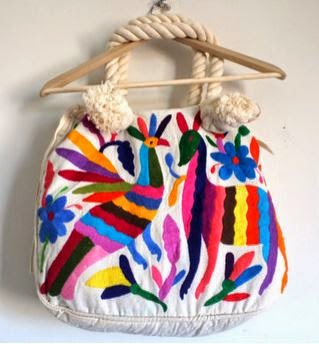
Cultural anthropologists are always off and talking to people.  They individuals on the go.  So why not get the cultural anthropologist you know a swanky bag to help haul all their tools of the trade (e.g. notebooks, tape recorders, cameras, etc.)?

Handcraft bag for sale from ArteOtomi
 
This bag by ArteOtomi is one such bag that you can purchase.  This handmade creation is one of many items that you can purchase.  Each items is crafted based on Otomi artistic traditions and are fairly traded items from Mexico.  Ultimately, it's a win win when you purchase from these artisans.

For the Archaeologist

A lot of people assume that archaeologists are constantly in the field, excavating really cool sites in exotic locales, but in actuality archaeologists spend quite a bit of their time in libraries and archives, conducting research, or in labs, analyzing the artifacts & materials that were excavated.  Most archaeologists enjoy being outdoors, so why not provide a little bit of the outdoors for the archaeologist you know?

Maya Period Succulent Planter by NomadicJourney

NomadicJourney has several items, ranging from other planters to handmade notebooks.  Each items is suitable for the archaeologist in your life, but this planter is my pick for the archaeologist in your life, particularly if that archaeologist works at ancient Maya sites.

For the Linguistic Anthropologist

Linguistics is the study of language.  This makes it often difficult to find the perfect gift for a linguistic anthropologist, but why not show your love in many different languages around the world?

"I Love You" and World Maps Prints by JoyGoldsteinStudio

This print set by JoyGoldsteinStudio may be the perfect gift for the linguistic anthropologist in your life.  If not this store has other options, including several prints that focus on focal language and dialects.

For the Physical Anthropologist

Physical anthropology is one of the most diverse anthropological subdisciplines, which makes it both easy and challenging to find the perfect gift, but do not fear because TaylorCustom is here!  This brilliant artist makes a variety of key chains, necklaces, drawer pulls, and more that cover several of the sub-subdisciplines of physical anthropology.  He has primate earrings, a mummy locket, and hominid key chains!

Homo erectus keychain by Tcustom

I have this keychain and have purchased others as gifts for other evolutionary minded individuals.  I can attest to the quality of his work.  You cannot go wrong!  And as an added bonus he makes items that are perfect for musicians, biologists, geologists, and even archaeologists!

For more gift ideas please check out the previous posts here, there, and everywhere!