There has been a long history of interest in death and the
afterlife among cultures around the world as evidenced by the diversity in
mortuary rituals and mythos concerning mummies, vampires, and the undead, and
there has been a recent resurgence with the recent fixation on zombies among Western
cultures. Internet memes, clothing, music,
movies, television shows, literature, and more focusing on zombies and zombie
themes have been mass produced over the last few years, and there is even a
blog through the Center for Disease Control and Prevention dedicated to
preparing the public against a zombie attack.
For better or worse, the fervor connected to zombies does not seem to be
dying down anytime soon (no pun intended).
Today’s blog post is dedicated to the anthropological understanding of
zombies, specifically defining zombies, their origins, their creation, and
their purpose in Western (specifically American and Canadian) cultures today.
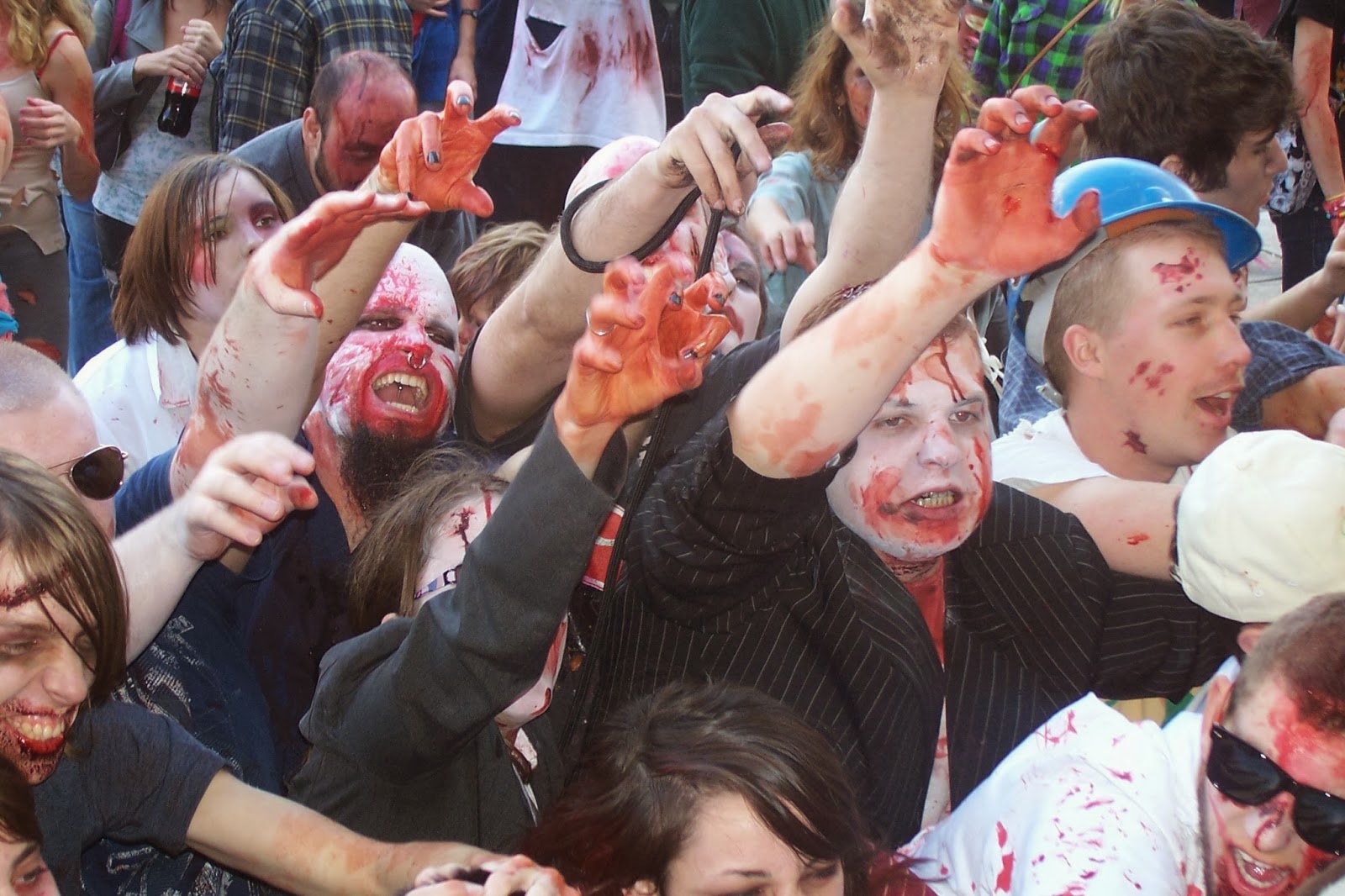 |
| London, ON, 2011 Zombie Walk (Photo by Christine Boston) |
The term zombie, also written as zombi, is popularly used
today to refer to the “living dead,” or deceased individuals are reanimated, but this is just one of two primary
definitions of the term zombie. Zombies
can also refer to souls that no longer have an associated body to reside in,
which in Western cultural understanding is also known as a ghost. For the purposes of this blog post, however,
the former definition of a zombie (reanimated corpse) will be used.
The physical zombie gained popular attention with the work
of Canadian anthropologist Wade Davis.
Davis published two works, The
Serpent and the Rainbow and Passage
of Darkness, which detailed the discovery of Clairvius Narcisse, a Haitian
man who was believed to be dead but was found years later alive. His living after death state was immediately
associated with his being a zombie.
Davis’s subsequent investigations determined that Narcisse was drugged
with tetrodotoxin, puffer fish toxins, and held captive and enslaved as
punishment for being a bad individual in “life”.
Davis’s work initiated further research into the zombie
phenomenon both in Haiti and abroad, and through this research a better
understanding of the origins and meanings of zombies has been gained. Zombies are now associated with the Voudon
religion, which is a syncretic mix of African religions, Christianity, and
other ideologies. Zombies are largely
associated with Caribbean, particularly Haitian, cultures but also found
throughout African and some South American cultures, as well. Zombie mythos are believed to have originated
among African cultures and brought to the New World with the forced migration
of Africans during the Slave Trade. The
mythos has since morphed among both Old and New World cultures as a result. The central theme among all of these
different cultural interpretations of zombies is that the zombie is an
individual who was resurrected after death.
 |
| London, ON, 2011 Zombie Walk (Photo by Christine Boston) |
The creation of zombies is a contentious issue, particularly
given the renewed fervor of zombies and the evolution of the mythos in Western
cultures. Among African and Caribbean cultures,
it is believed that a zombie is created by a sorcerer who either curses or
poisons an individual who dies shortly thereafter. The newly deceased individual is the “resurrected”
by the sorcerer, although many believe that the sorcerer merely excavates an
individual who was buried alive. The
newly “resurrected” individual is characterized as having no memories,
personality traits, or awareness of who they are or were and is, in essence, a “soulless”
being. The zombie is then enslaved by
the sorcerer or to whomever the zombie is given or sold. The mythos surrounding zombies goes further
by stating that zombies should abstain from eating salt, or they will no longer
be a zombie and therefore return to their graves or seek vengeance against the
living.
But why does the zombie mythos exist and persist in cultures
around the world? There are many ideas
out there, but it appears that zombies present a moral tale about the human
condition and society at large. For
example, the Max Brooks book World War Z
ignited a firestorm of controversy as it explored themes concerning human
survival and altruism (or the lack thereof in many cases). Film theorists believe that George Romero’s Night of the Living Dead was a
commentary on the American political system and/or consumerism of the
1970s. And among Haitian cultures, it is
said that only “bad individuals” will become zombies as punishment for their
misdeeds during life, as evidenced by the tale of Clairvius Narcisse who was
portrayed as a ruthless man in life. So
while many different ideas about the purpose of zombie mythos exist, it appears
that the most common theme is the tale of morality, however that is culturally
defined.
 |
| Zombie Love, London, ON, 2011 Zombie Walk (Photo by Christine Boston) |
References:
http://blogs.scientificamerican.com/anthropology-in-practice/2011/10/26/the-american-fascination-with-zombies/
Ackermann, H., & Gauthier, J. (1991). The Ways and Nature of the Zombi The Journal of American Folklore, 104 (414)
A & E Documentary on zombies based on The Serpent and the Rainbow by Wade Davis
Personal Communications with zombie enthusiasts
