Saturday, July 15, 2017

Down but Not Out: Discussing the Significance of the Clovis Culture


Figure 1: Clovis Point

The following post is a follow up to a previous post thatdiscussed new evidence of the peopling of the New World.  Until recently archaeologists believed that the first Native Americans were the Clovis people, but more recent archaeological evidence demonstrates that this idea was incorrect and there were actually groups of people before the Clovis.  But who exactly where the Clovis?  Today’s post will discuss who the Clovis people were and what we know about them.

The Clovis people were originally believed to be the founding human population of the New World.  It was originally believed that they crossed the Bering Land Bridge between modern day Siberia/Russia and Alaska/United States of America and moved into the modern day United States through an ice free corridor around 11,200 years ago (the earliest date associated with the Clovis culture).  While this hypothesis is now largely abandoned the existence of the Clovis people is still not in dispute. 

The name Clovis comes from the site outside of Clovis, New Mexico, where this culture was first identified in 1932.  The town of Clovis inspired the name of the stone points diagnostic of the culture.  These stone points are bifacial (meaning worked on both sides), fluted (meaning a section removed from the middle of the tool) lanceolate projectile points (Figure 1).  These points can be found across the modern day United States with some evidence of their presence in Mexico and even Venezuela (in northern South America).  These points would have been attached to a long spear and used for piercing the thick hides of mammoths.  There is evidence of Clovis points in the remains of mammoths, further supporting the notion that the Clovis were big game hunters.  They would have also foraged for their food in order to supplement their diets.  In addition to their Clovis points the Clovis people also manufactured bone tools, hammerstones, scrapers, and unfluted projectile points.  Taken together this evidence suggests that the Clovis people were nomadic hunter-gatherers.

Because of their early existence, the preservation bias against artifacts of this age, and the nomadic nature of these groups very little else is known about the Clovis people.  In addition to the already identified information we do know that the Clovis culture disappeared around 10,500 years ago.  This was most likely the result of the extinction of the mammoth, their primary source of meat, as well as changing climatic conditions.  The Clovis culture was replaced by various other hunting and gathering groups who exploited different resources and used new stone tool technologies.  While the Clovis were not the first Native American groups to populate the New World they most definitely were the founding population for several later cultural groups, and therefore still hold a significant status within Native American history.

References

Waters, M. R., & Stafford, T. W. (2007). Redefining the age of Clovis: implications for the peopling of the Americas. Science, 315(5815), 1122-1126.

Montenegro, A., Araujo, A., Eby, M., Ferreira, L., Hetherington, R., & Weaver, A. (2006). Parasites, paleoclimate, and the peopling of the Americas: Using the hookworm to time the Clovis migration. Current Anthropology, 47(1), 193-200.

No Author.  No Date.  “Clovis People.”  Crystalinks.com.  Retrieved from http://www.crystalinks.com/clovis.html


Saturday, July 8, 2017

The Strength and the Perseverance of the Azande


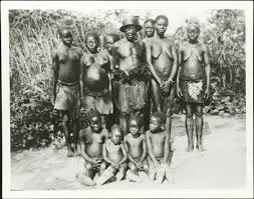
Figure 1: Azande people
 
Many students of cultural anthropology learn about various different cultural groups that have and continue to exist in our modern world.  These cultures may remain the same or have changed as a result of globalization and cultural contact.  There are several diagnostic cultures that are used to explain concepts related to culture, and today’s blog post will explore one such culture: the Azande of north central Africa. 

The Azande (Figure 1) is a cultural group that lives in north central Africa (Figure 2), residing in the modern day countries of the Democratic Republic of the Congo, Sudan, and the Central African Republic.  This culture has been widely studied, particularly by anthropologist E.E. Evans-Pritchard.  As a result almost all aspects of their culture and lifeways have been studied and realized. 

Figure 2: Azande territory in Africa
  
The Azande are sedentary horticulturalists who cultivate maize, millet, gourds, pumpkins, manioc, and bananas, as well as raise chickens.  They supplement their diets by hunting and gathering.  The Azande govern their independent groups through chiefdom level groups that are divided by the noble class, known as the Avongara, and the commoners.  Both of these classes are led by a chief who is the military, economic, and political leader.  The chief is responsible for overseeing the borders, which are guarded by sentinels.  While attacks among Azande groups are not common but do occur when a group is in need of food resources. 

The Azande practice polygamy, with men taking on more than one wife.  Men who are interested in taking a woman on as his bride must first court her because she has quite a bit of choice and autonomy in the marriage arrangements.  He must also pay her family an appropriate bride price.  Typically, when the marriage arrangements are being negotiated he is not just negotiating the marriage of his intended bride but also potentially her sisters as his additional brides, although typically at a later date.  A man typically will marrying women of various different families, and it is not uncommon, although not culturally acceptable, for these women to engage in lesbian relationships.  Homosexuality is not uncommon among Azande men either.  Sentinels who are guarding chiefdom boarders and separated from women are known in taking on “boy wives” as their lovers (Figure 3).  These are typically their apprentices who the Sentinel is training.  This relationship is not accepted but rather overlooked and deemed an effect of the job.

Figure 3: Azande Boy Wife and Sentinel Husband
 
The Azande are best known for their religious beliefs.  The Azande believe that all people contain elements and powers related to witchcraft, which is called mangu.  Mangu is the basis of all misfortune, and people unleash their mangu on individuals they know but unintentionally.  Whenever something bad happens, such as stubbing one’s toe or tripping over a log, witchcraft is blamed.  Small infractions do not warrant investigations and witch hunts, but illnesses and deaths, particularly accidental ones, are blamed on witches who sought revenge on the deceased.  In these cases an individual who was recently in conflict with the ill or deceased person is accused of bewitching the person, and the witch must prove that he or she did not bewitch anyone.  They perform a ritual where they spit water over a dead chicken’s wing to appease the spirits and remove the witchcraft.  If the public is not satisfied, however, the witch will be put to death in retribution.  In this way witchcraft and accusations of witchcraft are an effective means of social control among the Azande, keeping the peace among the Azande.

The Azande have a rich culture that they continue to practice despite interventions by colonial powers and modern conflicts.  This perseverance is a testament to the strength and resolve of the Azande people.  There is no doubt that they will continue to live their traditional ways of life for many generations to come.

References

Peters-Golden, H.  (2011).  Culture Sketches: Case Studies in Anthropology. 6th Edition.  Mc-Graw Hill Education.


Saturday, July 1, 2017

Language & Perception: Examining the Sapir-Whorf Hypothesis


Figure 1: Language and color distinctions as demonstration of the Sapir-Whorf Hypothesis (Kay & Kempton, 1984)


Anthropological linguistics focuses on the relationship between culture and language.  One of the primary concepts that students of anthropological linguistics learn is the Sapir-Whorf Hypothesis.  This hypothesis has since been dismissed and largely no longer supported, but it is still worth exploring because it has some merit and has led to a great understanding of language and perception.  Today’s blog post will explore the Sapir-Whorf Hypothesis and discuss what merits it does and does not have.

The Sapir-Whorf Hypothesis was established by Edward Sapir and Benjamin Whorf in 1929 but did not become the center of anthropological attention until the 1950s.  Edward Sapir was a linguistic anthropologist who focused his research on structural linguistics, and Benjamin Whorf was Sapir’s student.  They put forward their hypothesis that claimed two things: first, language influences of our perceptions of the world, and 2) languages are so unique that it is difficult to translate thoughts and products of language from one into another.  Sapir and Whorf claimed that the Hopi concept of time and the Inuit focal language associated with snow supported their hypothesis.  The Hopi identified different aspects of time that they claimed was radically different from Western conceptualization of time, and the Inuit’s numerous words for snow provided them a greater understanding of environmental conditions compared to languages that lacked those same lingual distinctions.  Another line of evidence to support the Sapir-Whorf Hypothesis comes from color terminology among various languages.  Some languages only identify a small number of colors (e.g. the primary colors), whereas others (e.g. English) have several different terms and therefore speakers can recognize more colors than other language speakers (Figure 1).  This means that what English speakers recognize as pink may be identified as red by another language speaker.

Unfortunately for Sapir and Whorf their hypothesis did have several flaws.  First, after much scrutiny it was determined that neither Whorf nor Sapir actually interviewed any Hopi individuals.  This was a huge flaw with their hypothesis, which was made worse when further study demonstrated that the Hopi concept of time was not very different from that of Westerners.  Another criticism with the Sapir-Whorf Hypothesis related to their idea that languages cannot be translated into others.  While there is some truth to this (as there are some sayings and concepts that cannot be 100% translated) the basic ideas can be translated and the overall message will not be lost.  Taken together, the Sapir-Whorf Hypothesis has largely been dismissed.

In conclusion, the Sapir-Whorf Hypothesis, while no longer accepted, has some merits and has provided anthropological linguists more insights into language and culture.  Through the study of this hypothesis a greater understanding of cultural understandings of the world has been reached.  Also, a greater understanding of linguistic diversity has also been accomplished.  Just because a concept is wrong does not mean it cannot be useful, such as is the case for the Sapir-Whorf Hypothesis.

For students wanting to learn more about the Sapir-Whorf Hypothesis please watch this video.

References

Badhesha, R.S. (2002).  “Sapir-Whorf Hypothesis.”  Retrieved from http://zimmer.csufresno.edu/~johnca/spch100/4-9-sapir.htm


Kay, P. and Kempton, W.  (1984).  “What is the Sapir-Whorf Hypothesis?”  PowerPoint Presentation.  NT Rusiyanadi.

No Author.  No Date.  “The Sapir-Whorf Hypothesis.”  Ask a Linguist FAQ.  The Linguist List.  Retrieved from http://linguistlist.org/ask-ling/sapir.cfm